Our Seattle Adventure

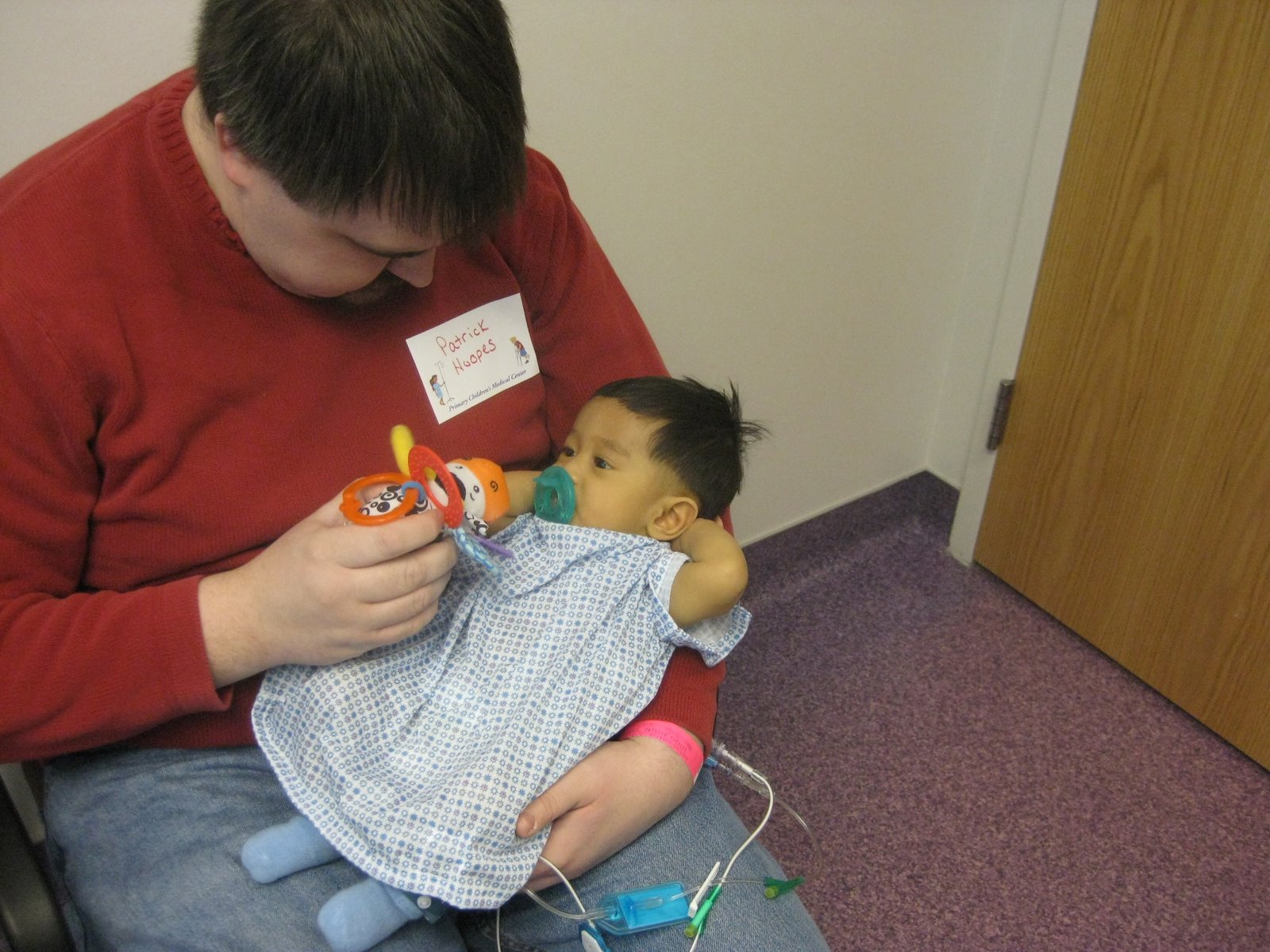
As many of you know, Patrick had an appointment for a check-up at Seattle Children’s this week. He was scheduled in clinic for about two hours Tuesday afternoon. We decided to try to make a family vacation out of this trip (since we haven’t had a vacation since adopting Patrick.) I think we need to stop saying the word vacation in our household. It seems that Patrick thinks that vacations are taken in the hospital – this trip did not go as planned.

We flew to Seattle on Sunday. We rented a mini van and drove to visit our good friends, the Laylands who live half an hour north of the city. We had a good dinner and visit with them and then spent the night at their house.

As soon as the plane touched down in Seattle, my nose started to run. At first I was sure it was allergies, but by the next morning there was no question that it was a cold. But, we were determined to have a vacation, so after a quick stop at K-Mart for some cold medicine and other things, we set off for the city.

After picking up some much touted Mighty-O donuts and checking into our hotel, we headed to the Seattle Aquarium. We were in the first exhibit, a sort of aquatic petting zoo, letting Patrick play in the water and touch sea creatures when I looked down and noticed blood on his PICC line. Closer examination revealed that there was something wrong … there was definitely a leak.

So I made a quick call to our transplant coordinator and we headed back to the ER, leaving a very patient Lindy and her daughter stranded in downtown Seattle to avoid exposing them to hospital ER germs.

We were checked in quickly in the ER and sent to an isolation room at the back because of Patrick’s and my cold symptoms. Soon the IV team came to look and confirmed that Patrick did, indeed, have a cracked PICC line. And it could not be repaired.

As a result, Patrick needed to have a peripheral IV put in until he could get another central (goes to the heart) line. And he needed to be admitted to the hospital because you can’t get as good of nutrition through just a hand or foot.

Wednesday afternoon, there was finally room in the schedule to take Patrick to “Interventional Radiology” where they could place a new PICC line with X-ray imaging to guide them. They took Patrick down at about 3 p.m. At 5:30, a doctor came to the room to talk to us.

He explained that they had tried to pass the wire through Patrick’s vein to put in the PICC line and had run into resistence. So, they injected contrast into his veins and saw that there had been a clot. In response to the clot, Patrick’s body created a branch of smaller vessels to route the blood where it needed to go. This meets the body’s need, but doesn’t leave enough room to put a catheter into the vein to the heart. Because of this, Patrick can no longer have PICC lines in his arms.

They put a little bit more stable of a line in his arm then that wouldn’t go bad as quickly as an IV in his hand or foot and then gave us two options: stay here and have a broviac line put in, or fly to Salt Lake, be admitted there, and have a broviac put in.

We decided that it was best to just stay and have it done here in Seattle. The surgeons here had gone into the PICC placement procedure and had seen the problem first hand. Having Seattle Children’s put in the line also meant that he’d have it done sooner, since he could be put on the next day’s list.

Beyond that, in order to place the line, they needed to do an ultrasound study to see what Patrick’s remaining central blood vessels looked like. Since not having many available blood vessels moves you up the transplant list, we thought it was wise to have the transplant hospital have a record of what options remained.

So – yesterday Patrick had a new broviac line put in. He went to surgery about 3 p.m. and they were able to put the new line right where they wanted it. When I talked to the surgeon at 5 he sounded pretty good about how the procedure had gone.

There had, however, been one slight problem. Patrick’s stomach still doesn’t easily drain all the way. Even though he hadn’t eaten anything, and his stomach had been suctioned, it still wasn’t empty. As a result, he aspirated during the procedure. The surgeon said that they’d been able to clean out his lungs, though, and didn’t seem overly concerned. With any aspiration, there is a risk of pneumonia. He asked to keep Patrick 24 hours for observation, and then said he’d be able to go home.

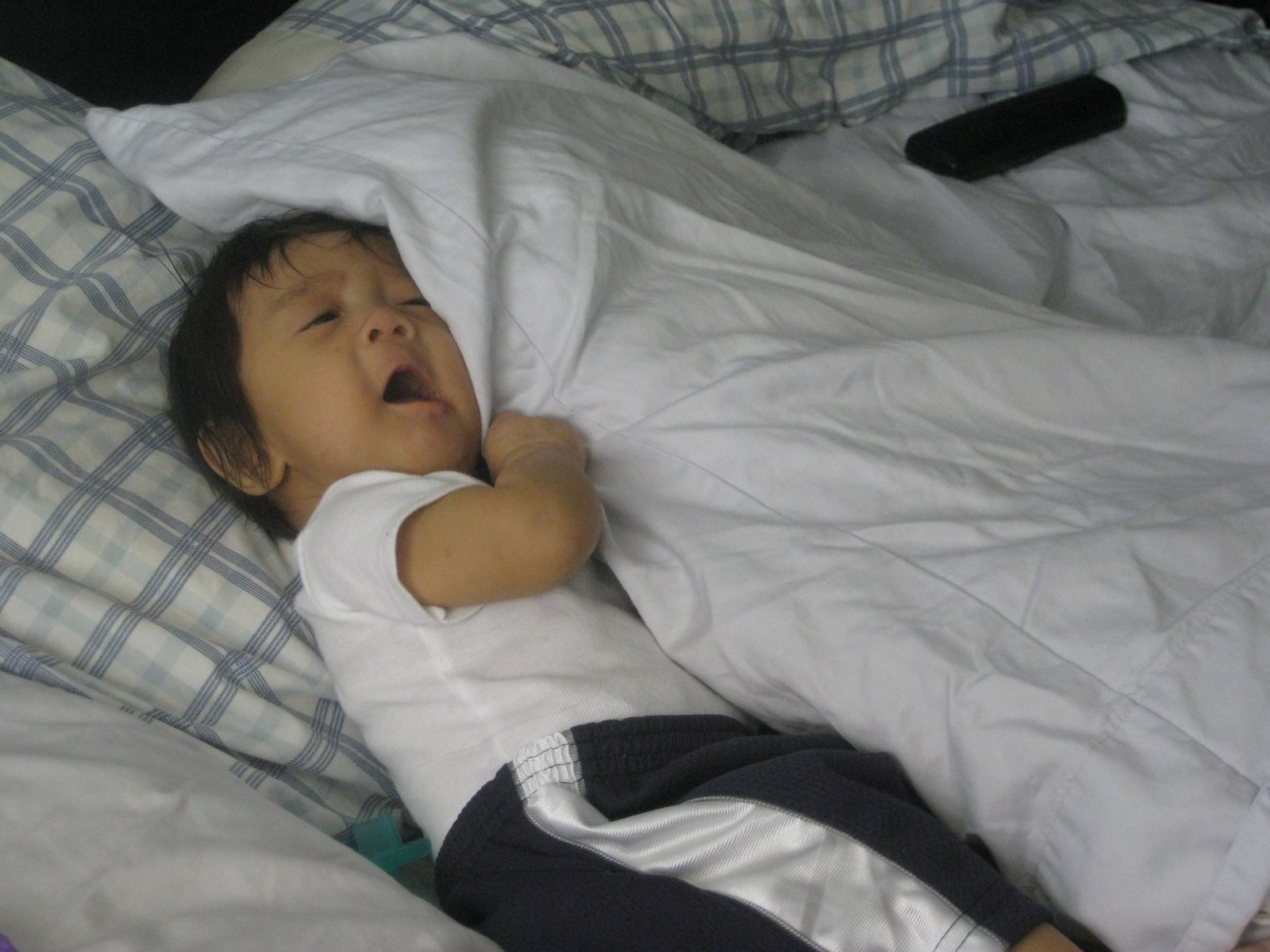
I went to Patrick’s room to wait for him. When he finally made it upstairs, he was very upset. He’d curled himself into a little ball and was crying miserably. The nurse immediately set to work getting pain medications for him. And we decided to put him on monitors.

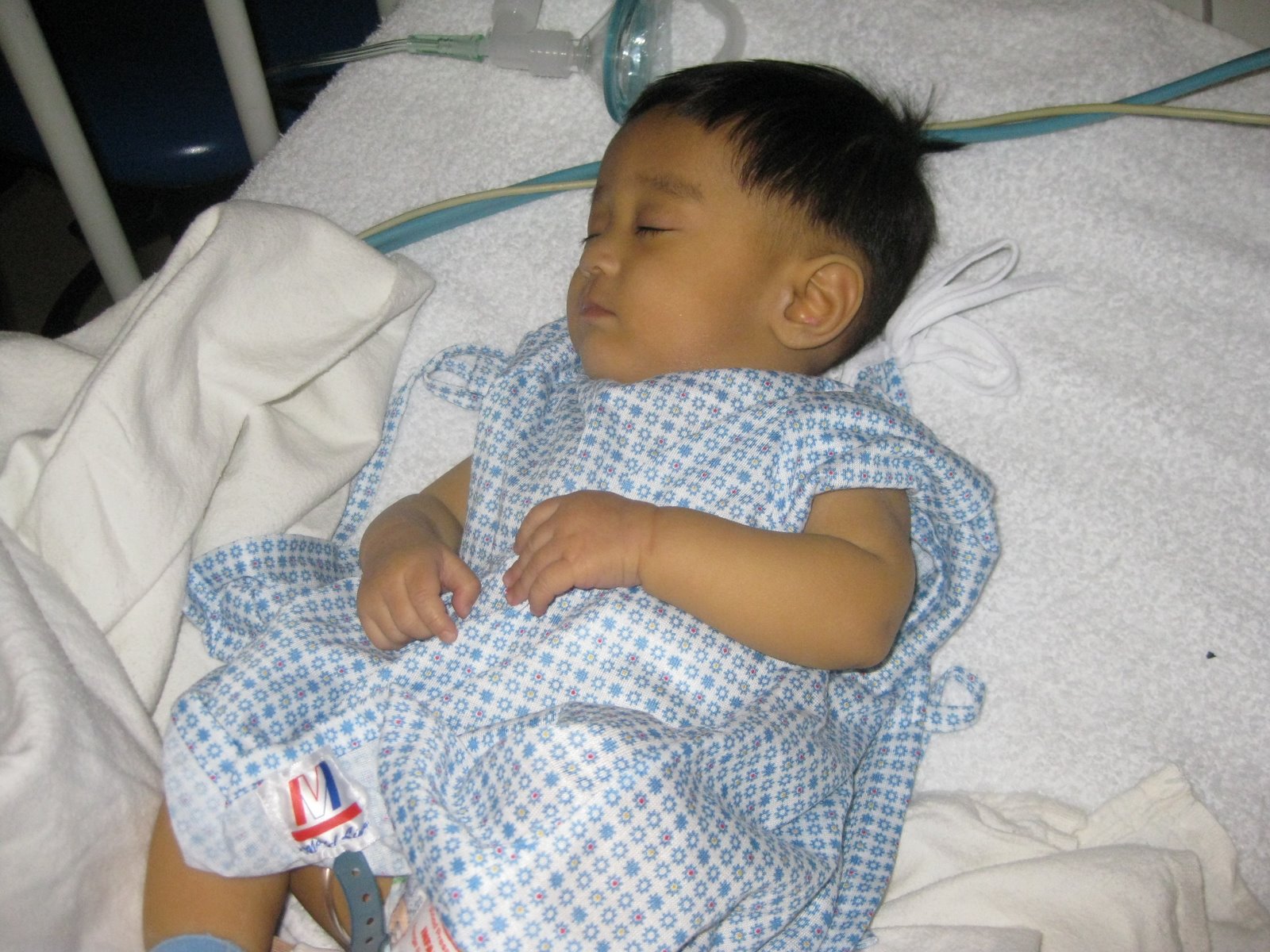
Things just seemed to get worse. The monitors showed that the oxygen levels in his blood were dropping, so we put an oxygen mask near his mouth to help keep them up. His heart rate was rising. He was breathing very heavily.

The nurse called in other nurses to help her and started taking vitals… And discovered Patrick was running a fever. They called down his doctors. While I explained the scarier things in Patrick’s medical history, his nurse wandered around the room making space to work if things got worse.

They ordered blood cultures to look for infection, gave Patrick some Tylenol, and got an X-ray of his chest.

Finally, they called the “Rapid Response Team”, which is a team from the PICU who come to the bedside. They watched him, took some tests bedside, and promised to come back to check on him within the hour.

Once all of the tests were done, I picked Patrick up again and he finally started to calm down. They started antibiotics while I rocked him to sleep. His heart rate was still high, and the antibiotics were making his blood pressure low, but he seemed to be starting to feel better.

As things started to settle down, I asked the nurse to help me reach elders from my church. One of the doctors in the room had mentioned earlier in the week that he had gone to school at BYU and we’d talked about how we’d been there the same year both studying Spanish. He spoke up and said “I can take care of that for you.” It was subtle, but we both understood that he was telling me that he was an elder and could help me with what he knew I was going to ask for.

In the Church of Jesus Christ of Latter Day Saints we believe in the gift of healing by the laying on of hands by those who have authority from God. Brian is an elder in our church and had given Patrick one of these special blessings before he left. And this kind doctor subtly waited around until the nurses had left the room and then layed his hands on Patrick’s head and gave him another blessing, confirming the promises of health and comfort and strength.

Patrick slowly began turning around. His fever dropped and he started to sleep comfortably. A respiratory therapist came and tried to get Patrick to cough by pounding on his chest and back. Finally, she suctioned deep down into his chest and helped to get a lot of what was in his lungs out.

By midnight, Patrick was sound asleep. I stayed up to help the nurse get a few more things settled and went to bed. We slept till 7 a.m., when the doctors came in to check on him.

This morning, Patrick woke up with a smile. He was a bit weak and groggy at first, but has just gotten better and better all day long. Just an hour ago, he was climbing all over me on the couch in the room playing with toys and jumping. You would never know anything had been wrong.

The doctors are pleased enough with his improvement that they gave me the go ahead to book a flight back home for tomorrow. We’ll leave the hospital a little after noon to catch a 3:45 p.m. flight.  We should be home by 6 p.m.

I almost hate to write this because any time I’ve said that we were doing something this week, things have changed. But this time it feels like we really are going home. And I’ll be happy to be there.

I do have to share one example of the goodness of people in this world. While Patrick was in surgery, I put some of our clothes in the laundry room here. I got it as far as the dryer, but then when Patrick came back in such bad shape from surgery, didn’t make it back to it. I expected, when I headed back at midnight, to find my clothes piled in a basket somewhere. Instead, someone had taken the time to neatly fold them for me. This touched me because any parent using the laundry room here is doing it because their child is sick enough that they’re expecting to stay here for some time. The person who folded my clothes was certainly going through their own difficult time and would have been totally justified in being upset and offended at someone leaving clothes in a dryer. Instead, they took the time to make my day a little better.

This is just one example of the kindnesses that make raising a child with health problem so very rewarding.

Well it’s now been a week since Patrick’s surgery. Patrick is doing really well so far, considering. His incision is healing nicely. It doesn’t seem to hurt him anymore. He’ll sit and play and jump pretty much the same as if he were at home.

This is pretty amazing to me, considering that he still has staples and the area around the incisions and especially where the stoma was look bruised and ugly still. The staples will come out sometime in the next week.

He’s finished his round of post-op antibiotics, too. We were afraid he’d run a risk of infection at the surgical site because a stoma isn’t exactly a clean thing, but Patrick seems to be healing up nicely, regardless.

A few days ago, we started to see little traces of stool in Patrick’s diaper. It’s hardly anything at all, but quite miraculous for him, since his colon is so narrow right now. Pretty much all we’re waiting for here is for Patrick’s colon to have time to stretch out and start working. Until then, his stomach has to be suctioned, which is why he’s got a tube in his nose. At the rate things are going, there’s probably still another week ahead of us, though.

With as little as is there, though, Patrick’s poor little bottom is already red – despite the heavy duty diaper cream I’m using on it. This will be normal for him, though. So we’re just trying to get a good start.

So things are pretty calm here. Of course, nothing is ever 100% simple. In addition to post-op concerns, we’re watching a rash that appeared under Patrick’s central line dressing a couple of days ago to make sure it doesn’t lead to complications and infection. And… as Patrick likes to do to stump us, his heart rate has been low when he sleeps. So we’re watching, as always, to make sure that all stays well. This, for Patrick, is pretty routine… even if it does cost me some sleep.

Well enough to leave the PICU

About 2 hours ago, Patrick was transferred out of the PICU into the infant unit. He’s doing SO well! We’re just past 48 hours post-op and he is already awake and playing most of the day.

He’s got so much energy in fact, that he needs reminded that he can go to sleep. The poor thing is used to being rocked to sleep, but it hurts too much to move him to get him out of bed right now. So I end up putting down the siderails and snuggling my cheek up to his till he falls asleep.

They turned off his morphine drip and he’s getting by on a dose every few hours instead. The funny thing is that right now what helps best to calm him down when he is crying because something’s happened to cause him pain is if I pretend to make a beanie baby bull named Snort that was given to him yesterday talk. I don’t know if it’s the bull or my funny bull voice, but it usually is enough to at least settle him a bit until the pain eases.

So what is tomorrow’s surgery, anyway?

We’ve had a lot of questions recently about Patrick’s surgery. Seems that there’s some questions about what exactly is going on. I’m going to attempt to explain what is happening in this blog post.

First, though… This is not his transplant, nor does it eliminate the need for his transplant.

Patrick is scheduled to have his small and large intestines reconnected tomorrow. To understand why this is necessary, let me tell you a little bit about his anatomy. While the average small intestine is about 20 feet long, Patrick was born with just 10-15 centimeters of small intestine. He has under a third of his large intestine. Because the large intestine has never been used, it is pencil thing. In contrast, the small intestine has been trying to adapt, which means it is larger in diameter than it would normally be. Here are a couple of images taken in April that might help you to visualize what that means.

From The Hoopes’s’s
From The Hoopes’s’s

The small intestine has three parts with 3 different roles. You can read about them here. Patrick only has the first part, the duodenum, which is very short, and an equal portion of the second, the jejunum.

The surgeons at the hospital where Patrick was born were not comfortable trying to put two pieces that were so very different in size together. Instead, they opted to create an “ostomy”, or “outward hole”. They made a whole in his side and brought the end of his small intestine out through it.

This option has it’s advantages. It’s easier to keep his skin healthy. (Patrick’s small intestine ends before stomach acid is reabsorbed so his stool can easily burn the skin.) And it’s easier to track fluids lost so that we can replace the water and electrolytes he loses. (The small intestine also ends before water and electrolytes used in digestion are reabsorbed.)

However, Patrick’s transplant surgeon and GI have asked us to take down the ostomy and connect his intestines. There are risks in having an ostomy. As his liver begins to scar, it will start looking for other ways to send blood away from it. The result is that smaller vessels will carry more blood than is usual (hyperportal tension) and a stoma could start bleeding uncontrollably.

Furthermore, the colon, while it doesn’t absorb nutrition, does absorb some bile and water and electrolytes, so in the end Patrick might lose less. This would mean he could eat more without it becoming dangerous for him.

Finally, Dr. Reyes says that he’s learned over the last 20 years that patients whose colon is in use, rather than having an ostomy, fare the wait for a transplant better. The body is happier when all the organs that can be working are. And the colon sends bile and water back to the liver, which is the liver’s version of job satisfaction. It will work better because it’s getting a positive response from it’s work.

So… the next questions you ask me are these.

1) Does this mean he won’t need a transplant as badly? No. Although the intestine does a fabulous job of adapting when it’s shortened, Patrick still is missing the vital section called the ileum where all the nutrition is absorbed. Without it, he is TPN dependent, which is where the risk to his life lies.

2) Will his diapers be normal? Well, yes and no. He will poo now. But it will still be mostly water and bile, kind of like a severe case of diarreah. We’ve been told we’ll change at least 12 diapers a day and need to use heavy duty diaper creams in order to keep the skin from breaking down in diaper rash or worse. We will also probably have to do some form of “double diapering” to prevent against explosive leaks that are common in kids with short gut and to be able to continue to monitor the fluids he loses so they can be replaced.

3) What will his recovery time be? We’ve been told to expect at least a week of recovery. He’ll go first to the PICU because he failed extubation in July. The critical care doctors will then be able to wean him off of the ventilator at a pace that is better for him. Once he can breathe on his own, he might be transferred to the infant unit… or he might stay in the PICU. It all depends on how his recovery goes.

4) Is this a risky surgery? Well, yes. With the run of infections Patrick has had lately, they are operating with him not quite as healthy as they would normally ask. There are risks of the connection leaking, or losing even more of his intestine, of the wound not healing because the skin where they are operating is so frequently exposed to stool. It’s also risky to reintubate Patrick right now. But, the risks of bleeding from his stoma are worse and Patrick is the healthiest he has been all summer, so it’s a chance we need to take.

5) What will happen on surgery day? We’ll get the time for surgery this evening. Tomorrow Patrick will fast. We’ll be admitted through outpatient surgery because Patrick’s surgeon was scheduled to be off tomorrow and added Patrick on because it was the time that was best for Patrick. The wait for surgery itself is always a bit nebulous. We’ll meet a surgery nurse and an anesthesiologist, and then finally Dr. Rollins will come talk to us.

In addition to the intestinal surgery, Patrick will have a liver biopsy, have his PICC line removed and a new broviac line placed, and have a scope done by urology to look for scarring from the catheter he had placed in July while he was in the PICU. The total OR time scheduled is about 3 1/2 hours.

We’ll wait in a parent’s waiting room where they’ll come to keep us up to date. Then instead of going to recovery, he’ll go straight to the PICU.

6) Are you nervous? It’s always hard to take your child who is healthy and happy and playing to a surgery knowing that there are risks involved… and even in best case scenario, knowing he won’t feel well for several weeks afterwards. However, we’ve been praying about this and feel calm that things will go as they’re meant to.

So – there you go. All you could hope to know about tomorrow’s surgery. We’ll do our best to keep you updated as soon as we know what’s happening. Most of the time, we’re waiting for answers, too.

Thanks for your continued prayers and support.

Transplant Pre-evaluation: Day 2


Monday morning I woke up at around 6 a.m. to try to get everything packed and ready for a day at the hospital. Our first appointment of the morning was at 9 a.m. and we needed to arrive early enough to check in and find our way around.Our transplant nurse, Sandy Mitchell, met us in the “Whale” (outpatient) wing of Seattle Children’s Hospital. We had to stop and get badges at a security desk at the entrance identifying us as Patrick’s parents. Then we went to a registration desk in the middle of the main floor and they got us checked in. They gave us a “purple pass” to use to check in for the rest of our clinic visits that day so we wouldn’t have to wait in line again to check in, and then gave us a pager and sent us off to the cardiology waiting area.


Patrick’s first appointment was for an EKG. They stuck probes all over his chest… so many that you could barely find a patch of visible skin and then in just a few minutes had a printout of the electrical readings of his heart. The funniest thing about all this is that we did it all with him still in his stroller. Hooray for whoever at Carter’s thought up the snap front bodysuit. Best hospital clothes every dreamed up for a baby!

Next Patrick had an echocardiogram. This is an ultrasound of his heart and it took about an hour to do. We undressed him this time and I laid on the table with him and kept him calm and entertained. Between Baby Einsteins on the TV and the cool black and white images on the monitor, though, he didn’t need my attention much. Funny the opportunities that life presents you, though. I finally got the chance to see my baby’s heartbeat on ultrasound!

After lunch, we headed upstairs and met with the nutritionist for the intestinal transplant program. She looked over Patrick’s most recent lab results, his output history, and his current diet and then she made suggestions, which I’ll be blogging about in a future post. It was great to hear he say that she was happy with how Patrick’s care is being managed and that she fully trusts our dieticians here.

Our next appointment was probably the most brutal of the day. We spent 2 hours with the transplant coordinator and she went over all aspects of the transplant. She explained what they’re looking for in a transplant patient and how the approval process works. (Basically, after the workup the transplant team meets together and decides if Patrick is a good candidate for transplant and if they’re willing to list him, or if there might be other things they can do to care for him w/o a transplant). Then she explained that Patrick, if accepted, would be followed closely by the team in Seattle and would probably make regular visits back to Seattle pre-transplant so they can monitor his care.

She explained a bit about what to expect when an organ became available. We learned that he will have 6-8 hours max to get to Seattle once we get a call saying that there is a donor organ. He’ll need to be healthy at the time, of course. The surgery will be a very long one, followed by a hospital stay of at least a month.

Most of the talk was about what to expect after transplant, though. First of all, to prevent rejection of the new intestine, his immune system will be surpressed. Because of the risk of rejection and other complications, we’ll need to live close to the hospital so that he can have regular follow-up visits, including biopsies to check for rejection. He’ll be on immunosuppressants for the rest of his life, but in that first year, at least, his immune system will be incredibly weak. We’ll have to avoid public places as much as possible and avoid exposure to any kind of illness, bacteria, or other source of bugs that can cause him problems.. His diet will be limited, and at first he’ll probably still be on TPN as he learns to eat and eventually to get enough nutrition that way, but they’ll work to slowly wean him off of that. He’ll be at risk for a lot of big scary health problems, including rejection, infection, and a certain type of cancer that can develop when the immune system is supressed. Here’s more information about the risks and ramifications of life after transplant.

Our last scheduled appointment was with pre-anesthesiology, which was really a simple one, considering that Patrick’s had surgeries before. They we headed upstairs because they’d ordered a bunch of lab test. We pushed to have labs drawn through his broviac, but they still wanted us to ask at the lab for it to be drawn by just sticking a vein. They told us to ask for their best tech, which we did. He took one look at the list of tests and then at Patrick and said that he didn’t feel comfortable drawing that much blood from a kid this size, especially through a needle, when he has a broviac line. So, he took a little blood for some blood typing, gave us a bag to collect a urine sample and sent us on our way.

We were pretty overwhelmed that day and avoided giving updates because it was so much information to process ourselves. Instead, we went out to dinner and Patrick made our evening for us.

While we were eating, I looked over and noticed that Patrick was imitating my expressions while I ate. He was making chewing faces and licking his lips when I did. Then he started to blow bubbles and, well, I decided to blow bubbles back at him. The next thing we knew, he’d learned to blow raspberries and would happily spit back at us whenever we spit at him. It was a fun game to play for the rest of the evening and week, and definitely helped to lighten the load of a HUGE day.

Firsts

We’ve been a very busy little family lately. Patrick is 5 months old now. And in the time since I last posted, we’ve had a lot of firsts. So, here are some highlights.

First giggles
Patrick learned to laugh a while ago, but we didn’t get out and out chuckles until we discovered that the kid who used to scream his head off whenever he got undressed is ticklish and loves to have his clothes off. Dressing and especially weighing are now favorite games… but it’s best when daddy just picks him up without clothes on and tickles his back.

Today we learned that you can also get belly laughs if you squish his cheeks.

First fever
Well, it all started with a cold, that turned into croup. After a week and a half trying to fight it off, Patrick got his first fever. Fortunately, it didn’t go much higher than 100.4 (38 degrees Celsius) and so we were able to have blood cultures drawn at home and his fever was gone in a day. No infection, thankfully. Just a day at home with Mom holding Patrick and taking his temperature every half an hour to make sure it hadn’t hit the danger mark yet.

First necktie
My brother Steven got married at the end of March. Although we were crazy busy working on his wedding cake and pictures, I just couldn’t help taking the opportunity to make Patrick and Brian matching neckties. We bought a tie with a matching handkerchief. Patrick thought his tie was a great toy to hold and chew on.

Oh, and a disclaimer on this picture. Patrick hates bright lights of any kind and we had studio lights on. Someday we’ll get a family picture with him not crying.

First rollover
I set Patrick down and turned my back on him for just a minute. When I turned back, he was on his tummy looking up at me as if to say “Whoa, Mom! What do I do now?” So far no signs of him having any idea how he did this or how to do it again. But we’re having much more play time on the floor to encourage him.

First haircut
After weeks of trying, we finally got time to take Patrick to my Grandpa’s house for his first haircut. In my defense (for those of you who thought I should never cut it), his hair was in his eyes and under his chin. Patrick was ok with the whole haircut idea till we hit the ticklish spot behind his ears. Finally, though, he fell asleep and we were able to finish. It’s a nice short cut.. but we hope that means it can grow for a while again before it needs another cut.

First ER visit
Last Saturday night, I noticed some bleeding under the dressing for Patrick’s central line. The line had shifted and, on closer inspection, we found that it had been pulled. It didn’t pull out, but was far enough to worry us. So – we got to make our first trip to the ER.

We were probably quite the sight there because, unlike the other families, we weren’t panicked. Central line issues are just part of life with Patrick. We’ve been planning and practicing for this trip for a while.

We arrived at 10:30 p.m. and had a bit of a wait in the waiting room because we were definitely not the most urgent case there. They took some x-rays to see the position of the line and about 1 a.m. the surgeon who placed Patrick’s line came into the room. He had been called in for an emergency appendectomy, and stopped in to see Patrick while he was there. He looked at it and said that the line was in a good position and he didn’t think it needed to be replaced on an emergency basis. Instead, we were to put antibacterial ointment on it twice a day to prevent infection, which meant lots of dressing changes, and then get a second opinion on Monday.

We were amazed, but happy, and after teaching an E.R. nurse proper technique for dressing change (yes, us teaching her), we were sent home. We got home at 3:30 a.m., connected Patrick’s feeding tube, and slept in till 11:30 a.m.

First outpatient surgery
So that brings us to Monday. About a month and a half ago we started the battle of the granulation tissue. Patrick had a patch of it next to his stoma that just kept growing back, no matter what we did. We learned to use silver nitrate to treat it, but it just kept coming back. So – we decided that maybe it was doing no harm and we’d leave it as it was.

No sooner had we made that decision than I discovered that his g-tube was surrounded by granulation tissue. A visit with the nurse practitioner in the GI clinic taught me better technique for nitrate treatments and after 10 miserable days of treatments, his G-tube site was clear of it. However, the spot by his stoma was starting to make it hard to keep a bag on and his skin was getting sorer by the day. I tried my newly practiced skills, but the tissue just kept coming back

So, we called and scheduled an appointment to have it electrocauterized. This is a minor procedure, but it’s painful and so they put babies to under so they don’t have to suffer through it. The surgeon we saw in the E.R. told us to as for follow-up at our appointment on Monday. It was still looking sore and red and swollen and the surgeon didn’t like the look of it, so he decided it was best to change the central line.

This means that they took it out of one vein and put it into another one, coming out in a different place on his chest. Again, this is something we’d been warned about, so it wasn’t a complete shock. However, we were a bit nervous and, after an already long weekend, quite tired.

The surgery went well. Patrick woke up and was able to come off the ventilator in no time at all. He was, as always, a favorite with the nurses in post-op. Brian got to reconnect his TPN in post-op, which was kind of funny to do. Our nurse was fascinated with the different equipment. We got some curious looks as Brian drew up vitamins with syringes and injected them into the IV bags.

It’s a curious thing to be the old pro parents in the hospital. I often refer to myself as a “hospital mom”. We know the routine. We’re patient with the nurses, doctors, and other staff and, although we are concerned for Patrick, we are not scared or intimidated by our surroundings as we once used to be. It’s kind of odd to feel perfectly at home in a hospital… But makes all of this more bearable.

Patrick was sore and tired for a day and still whimpers if we move his not-quite-healed shoulder the wrong way… But overall he’s back to himself. As for Howie and myself, well, we’re slowly but surely catching up on our sleep and getting back to a normal routine. And preparing for the adventures ahead.

First steps to transplant
And that brings us to the last of the firsts for this entry. We have made the first steps towards transplant evaluation for Patrick. We have appointments for April 27th and 28th at Seattle Children’s Hospital to meet with the surgeon, gastrointerologist and just about anyone else who might have anything at all to do with Patrick’s transplant. Theevalution process is big, long, and very detailed. They want to make sure that Patrick needs and will benefit from a transplant, that he’s healthy enough to have one, and that his home life lends itself to as successful of a recovery as possible. This trip is the first step in that process, and we are excited to go and learn and start building relationships there.

Patrick still has a long way to grow. He’s almost halfway to the 10 kilo weight goal. (He weighs 10 lbs 11 oz.), and so we know this visit won’t end with him on a list. But it’s a start and a step in the right direction.

And so, those are the firsts we have to report for the time being. We’re looking forward to continuing to see him learn and grow. He is so good at using his hands now! And has just started to discover that he has feet. His spirit grows by leaps and bounds every day. Most of all, he amazes us with his incredible patience and optimism.

Broviac Line

I wrote earlier that Patrick was going to have a broviac line placed after his infection had cleared. However, since he has tiny, tiny veins it’s really hard to get a peripheral IV into him and equally hard to keep him there.

Because he doesn’t have enough of his bowel to be able to absorb nutrition or medicine that he takes orally, Patrick depends on an IV to give him the nutrition that he needs. Also, as he’s recovering from this most recent infection, he needs IV antibiotics.

When I arrived at the hospital this morning, they told me that they’d be placing his Broviac line today instead of waiting a week. He’s been stuck just so many times trying to place an IV that they were running out of places to look – and he was running out of patience for it. He went to surgery this morning to have the line placed. It goes in through a vein by his neck and is “tunneled” under his skin. A catheter, or IV tube, comes out of his chest. This is a more durable IV line that should last him several months. In fact, one requirement to take him home was to have this more durable line put in.

Patrick went into surgery a little before noon today and was in recovery by 12:15 p.m. So far he’s been sleeping quite peacefully. We expect a quick and easy recovery. As soon as he’s awake, he should be able to go back to his normal routine.

If you’d like to know anything more about the line, this link will take you to the info sheet that Primary Children’s Hospital gave to me.

The bestest birthday present ever

This year, my ultimate birthday wish came true. On Tuesday we were given custody official legal custody of Patrick. This was done in what was pretty near record time for the state of Michigan. Now we only have a couple of hurdles left before we can bring him home.

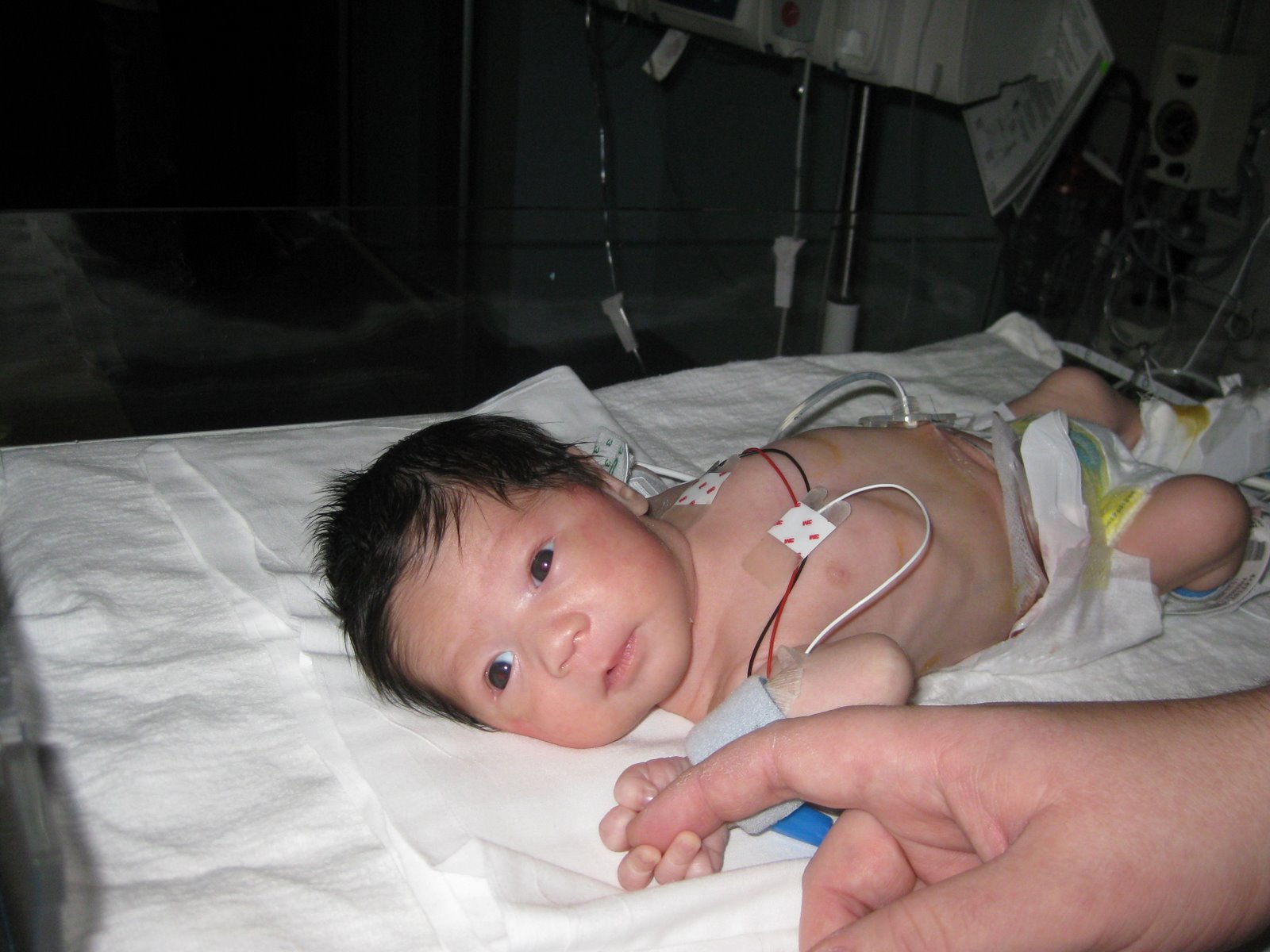
If you haven’t heard the sorry, we were contacted on November 5th by our caseworker and told about a little boy who’d been born the week before in Michigan. The details of his medical condition were pretty sketchy, but in essence, we knew that he had to be fed through an IV and that his chances of living past age 2 were pretty slim.

Our gut reaction was grief, mourning for the loss of what we’d expected in becoming parents. But, at the same time, we’ve always felt that adoption is a faith process and we at least owed this opportunity some serious thought and prayer.

Brian came home from work and we said and prayer and went to the temple. And – decided that we should keep learning more. The next day we got some additional information from our caseworker and sent a copy of our adoption profile to Michigan. We really didn’t expect to hear much more and did not expect at all to be chosen.

But – the next day, as I met Brian at his office for flu shots, the phone rang and our caseworker told us that Patrick’s birthparents had chosen us. (I didn’t care so much anymore if it might hurt to get a flu shot). We quickly got in touch with caseworkers and the hospital in Michigan to learn more. We decided that the best way to assess the situation was to fly to Michigan where we could see things first hand.

We arrived in Detroit Saturday evening and, after cleaning up a bit at the hotel, went to the hospital. We were met there by a bit of drama between the birthparents… and were not met by the caseworker here. We were introduced to the birthmother and her family, and then to Patrick. We learned that Patrick was born with a defect called short gut, meaning that most of his bowel is missing. Because of this, he’ll need a bowel transplant to survive. But – he is so small that he can’t have a transplant until he at least doubles in size… and his chances of surviving infection and liver damage that long are pretty slim.

We went back to our hotel room completely overwhelmed and quite ready to just go home. But – we’d promised ourselves that we’d spend a day with him, and so Sunday that’s what we did. We spent a day holding him and learning what kind of care he needs. One thing to know about Patrick is that, unless you know something’s wrong, only the tubes attached to him would give away his condition. In every other way, he is a happy, healthy little baby boy. And by the end of Sunday, he’d pretty much wrapped me around his finger.When I got back to the hotel I started copying pictures from our digital camera. When I came across the picture at the top of this post, my heart just kind of sang. I knew that I’d fallen in love with this little guy.

There were still a lot of questions to be resolved, though. We didn’t even know if the hospital in Utah would be able to care for him. So we spent Monday morning talking to doctors, nurses, insurance, and social workers.

Brian had to fly back to run a conference in Utah that same day. His flight left at 1. And we had to make a decision the same day. We really didn’t know exactly how things would work out… but we couldn’t leave Patrick anymore, and so we called the caseworker and signed the documents to begin the adoption process.

Michigan requires that the birthparents appear in court and be questioned to ensure that they made the choice to place a child for adoption of their own free will… so we had a tense few days as the agency prepared paperwork and worked to get an early court date. Fortunately, Howie had plenty to keep him busy at home and my mom was able to come spend the week with me here so that we didn’t have to face that anxious time alone.

And – finally – just two days ago on my birthday, the court placed Patrick in our custody.Now we’re praying for smooth sailing as the interstate compact is worked out and, even more importantly, as we try to figure out how to get Patrick home. The price tag on an air ambulance to Utah is $30,000. The care manager at the hospital is trying to persuade the insurance company to pick up the tab for most of that, but they (understandably) aren’t sure that they want to do it.

So, we keep praying and working, and most importantly, enjoying our new little son. The best part of any day for me is being able to sit with him snuggled up to my chest… especially now that Howie’s back to share the moment with me.

It’s too hard to keep up with all of our loved ones by telephone, so we’re going to do our best to keep you in the loop through this blog. Thank you all for the love and prayers and support on our behalf thus far.